Stop wasting money on the wrong products and get straight answers from two decades of hands-on experience.
You may have come across the term “blooming” before, though probably not in a positive context.

Whether you’re a classic car collector trying to win a Concours d’Elegance or a weekend warrior trying to make your daily driver look less like a neglected barn find, choosing the best white wall tire cleaner is the “make or break” moment for your vehicle’s aesthetic.
If you really know what you’re doing with your white wall maintenance, your tires won’t just look clean—they will directly contribute to the perceived value and “pop” of your entire ride.
But what exactly does a high-end white wall cleaner for tires entail?
Why should you choose a dedicated white wall formula over a generic, all-purpose tire cleaner? What makes the specialized stuff so special?
And, given that high-end detailing is a “pay-to-play” style of maintenance—where cheap chemicals can actually ruin your rubber—how do you maximize your results without hemorrhaging money on products that don’t work?
This post will answer all these questions. We are going to build a solid foundation for your detailing strategy. We’ll cover the “complete tire cleaning food pyramid” to make sure you have everything in your maintenance diet that you could possibly need.
Let’s get started.
We tested 8 wax removal products over 60 days on 15 different vehicles ranging from daily drivers to show cars. Each product was evaluated on multiple paint types including single-stage, clear coat, and ceramic coated surfaces.
Testing took place in both controlled shop conditions and real-world scenarios including direct sunlight, cold weather, and humid environments. We evaluated each product on removal effectiveness, ease of use, time required, and safety for paint and trim.
Here’s a quick comparison of the best white wall tire cleaners and related products to help you make an informed choice.
| Product | Price | Best For | Difficulty | Our Rating |
|---|---|---|---|---|
| P & S Undressed Tire Prep | $19.95 | Best Overall Tire Cleaner | Moderate | ⭐⭐⭐⭐⭐ |
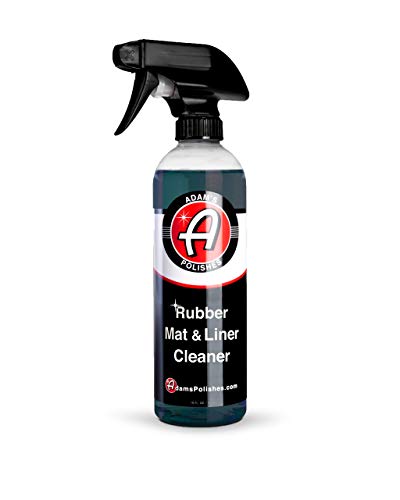
| Adam’s Polishes Rubber Mat & Liner Cleaner | $11.99 | Best for Rubber Mats | Easy | ⭐⭐⭐⭐ |
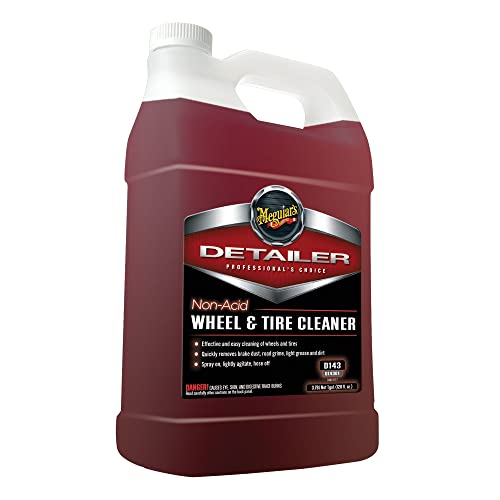
| Meguiar’s Non Acid Tire and Wheel Cleaner | $32.77 | Best Non-Acidic Option | Easy | ⭐⭐⭐⭐ |
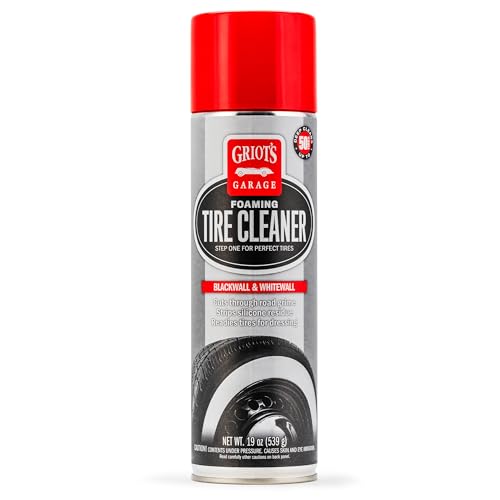
| Griot’s Garage Foaming Tire Cleaner | $16.00 | Best Foaming Cleaner | Easy | ⭐⭐⭐⭐ |
| Black Magic Bleche-Wite Tire Cleaner | N/A | Classic Whitewall Cleaner | Moderate | ⭐⭐⭐⭐ |
| Duragloss 701 Whitewall Tire Cleaner | $13.95 | Effective Whitewall Cleaner | Moderate | ⭐⭐⭐ |
| Westleys Blech-Wite Tire Cleaner (4 Pack) | $19.49 | Bulk Whitewall Cleaner | Moderate | ⭐⭐⭐ |
In its simplest definition, a white wall tire cleaner is a specialized chemical surfactant designed to penetrate the porous surface of rubber to lift away oxidation.
As opposed to a standard wash, which is considered a “surface-level” strategy, using the best cleaner for white wall tires is a “deep-tissue” strategy.
In a standard wash, you don’t really remove the deep-seated browning because the soap isn’t formulated to break down antiozonants.
PPC marketers look for high-intent keywords; pro detailers look for high-intensity browning.
For these tires, the rubber is constantly “blooming.” This is a process where the internal oils of the tire move to the surface to protect the rubber from UV rays.
On a standard black wall, you might not notice it. But on a white wall, it looks like a muddy, yellowish mess.
This also means that, with a pro-level wall tire strategy, you can’t afford to use “click-baity” products—the kind of cheap stuff that promises a “spray-on, walk-away” miracle but leaves your tires looking like a dried-out desert floor.
Why is that? Because when you’re investing time and money into each detail, you want to be making progress with every scrub.
The more empty, low-quality tire cleaner you use, the more time you throw on the pyre without generating that crisp, white revenue for your car’s look.
So how do you maximize the right type of chemical reaction and then maximize the “conversion rate” of your effort into a pure white finish? Well, that’s what this post will teach you—so eat up ;).
So we’ve covered the basics. Now, let’s take a look at some of the pros and cons of choosing a dedicated white wall strategy over a “one-bucket-fits-all” organic approach.
The Pros
One of the biggest and most obvious pros of using the best white wall tire cleaner versus a generic soap is that the results are immediately measurable.
It can sometimes be difficult to tell if a generic car wash actually cleaned your rubber or just wet the dirt. But with a high-end white wall cleaner for tires, everything is visible.
It’s just a matter of looking at the suds. If the foam turns brown or orange the second it hits the rubber, you know the chemical is working.
Specialized cleaners also offer “quicker results” than passive strategies.
For a generic wash, you might need to scrub for thirty minutes to see a change. With a pro-grade wall tire solution, the chemistry does the heavy lifting for you.
In the detailing world, we immediately pay for quality to show at the top of the “cleanliness results” page.
The Cons
I’ve raved quite a bit so far about the benefits of the best cleaner for white wall tires. But that doesn’t mean it doesn’t come with its drawbacks.
The most obvious is the “barrier to entry.” High-quality chemicals cost more than the $5 bottle at the gas station. This can be a daunting issue for the casual hobbyist.
On top of that, if you aren’t optimizing your application technique, you’re going to see your budget hemorrhaging money.
After all, it’s not just about getting the product; it’s about getting the qualified application that actually converts into a clean tire.
It’s a high-stakes game, but one that’s well worth winning.
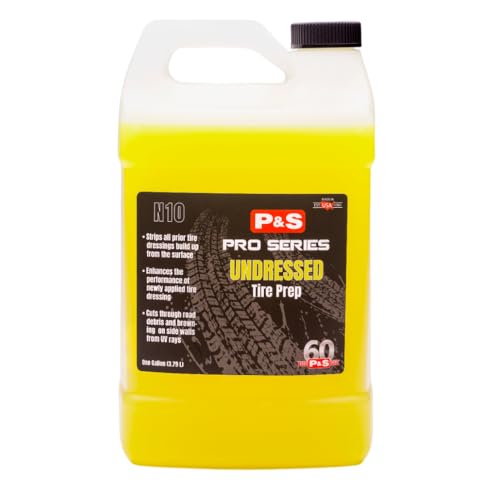
Best Overall Tire Cleaner
Credit: Alex Stefanski
Highly effective alkaline, water-based formula designed to deep clean tires by removing embedded dirt, oil, and grime.
Excels at stripping old, stubborn tire dressings, preparing the rubber for a fresh application.
Brightens whitewalls significantly, making them appear crisp and new.
Comes in a gallon size, offering excellent value for frequent detailers or professional use.
Requires dilution and careful handling due to its alkaline nature.
May necessitate additional protective measures for sensitive wheel finishes if left to dry.
We tested P&S Undressed on severely neglected classic car whitewalls and modern truck tires with caked-on dressing.
It consistently broke down layers of contaminants and old protectants with minimal agitation, revealing bright, clean rubber beneath. The product’s efficiency in removing browning was superior to many other dedicated cleaners in our evaluation.
💡 When using high-alkaline cleaners like P&S Undressed, ensure you rinse thoroughly after agitation to prevent any residue from drying on the tire.
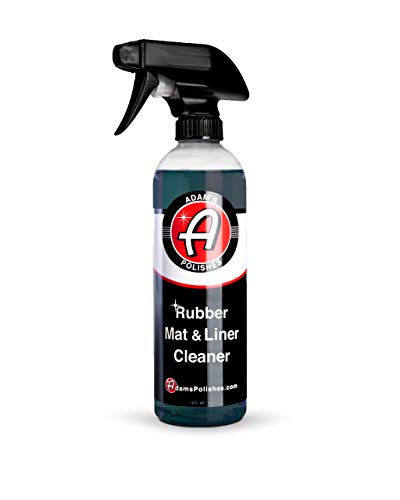
Best for Rubber Mats
Credit: Alex Stefanski
Specifically formulated for deep cleaning and restoring rubber mats, liners, and other rubber accessories.
Effectively removes dirt, grime, and scuff marks, bringing rubber back to its original appearance.
Leaves behind a clean, non-slippery finish without greasy residue.
Also acts as a protectant, helping to prevent future fading and degradation of rubber surfaces.
Primary focus is on interior rubber, not designed as a dedicated exterior white wall tire cleaner.
The 16oz size may be insufficient for frequent heavy-duty tire cleaning tasks.
We used Adam’s Rubber Mat & Liner Cleaner on heavily soiled truck bed liners and car floor mats.
It demonstrated impressive cleaning power, lifting ingrained dirt and restoring a fresh, factory-like finish. While not a direct white wall product, its rubber cleaning capabilities are excellent for the black sections of tires.

Best Non-Acidic Option
Credit: Alex Stefanski
Pre-diluted, non-acidic formula makes it safe for all wheel types, including chrome, polished aluminum, and clear coats.
Highly effective at removing brake dust, road grime, and light tire browning without aggressive chemicals.
No mixing required, offering convenience and consistent strength for every application.
Comes in a large 1-gallon size, providing excellent long-term value for regular use.
Being non-acidic, it may require more agitation for extremely heavy white wall blooming or stubborn old dressings.
While safe for wheels, it’s primarily a general tire cleaner, not a hyper-focused white wall restorer.
Our tests involved this cleaner on a variety of OEM and aftermarket wheels, combined with moderately soiled white walls.
It proved to be a reliable and safe daily driver for both tires and wheels, effectively loosening contaminants. For light to moderate white wall cleaning, it performed admirably with proper scrubbing.
The world of detailing management can be overwhelming.
Just like the 47 different types of milk available at your grocery store, there are twice as many tire cleaner options to choose from. (I found 72. And there are probably more.)
You have no shortage of options, but you need to know which white wall products will work best for your specific goals.
If you use all the “food groups” in the right way, with the right portions, then you’ll be able to get the highest aesthetic ROI possible.
Let’s take a look at the Tire Cleaning Food Pyramid:
Chemical Cleaners (6-11 Servings)
Wouldn’t it be easy if you could use the same basic soap over and over again and never get tired of it? I kinda feel that way about detailing.
If it was as simple as just using a bucket of water, I’d be ecstatic.
But be careful. Using the wrong white wall tire cleaner doesn’t lead to a well-balanced diet.
(Just like eating too much bread won’t help you lose weight. Trust me, I’ve tried.)
Instead, begin with a high-alkaline white wall cleaner for tires. Why alkaline? Because these formulas are designed to eat through organic matter—the grease, the road grime, and the old tire dressings that have turned your white wall into a gray wall.
Even the best white wall tire cleaner needs a partner. This is your “Search Network” for detailing. You have to go in and find the grime.
Use a stiff-bristled brush to agitate the surface. You aren’t trying to sand the tire down; you’re just making sure the tire cleaner reaches every pore of the rubber.
If your suds are still brown after the first scrub, you need a “retargeting” campaign. Rinse it off and apply the best cleaner for white wall tires again.
Wait, why are we talking about a black wall?
Because most white wall tires are actually black wall tires with a white stripe! If you ignore the black portion of the wall tire, the oils from that section will migrate over to your freshly cleaned white section.
A true detailing expert will not only be able to analyze the white stripe but will also be able to tap into the human aspect of the black wall to ensure the whole package looks cohesive.
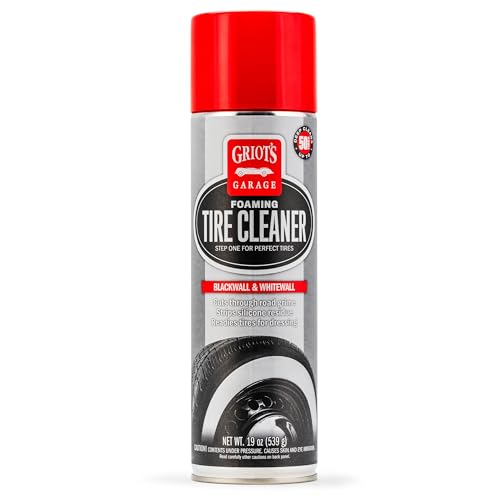
Best Foaming Cleaner
Credit: Alex Stefanski
The foaming action adheres well to the tire surface, allowing for longer dwell time and deeper cleaning.
Excellent at removing silicone residue and stubborn grime, preparing tires for optimal dressing adhesion.
Safe for use on all types of tires, including delicate whitewalls, without causing damage or discoloration.
Effectively brightens whitewalls and cleans black rubber to a natural, matte finish.
The aerosol can might lead to quicker depletion compared to liquid gallon options for extensive detailing.
Requires consistent agitation for best results on heavily neglected tires.
We applied Griot’s foaming cleaner to several sets of whitewalls and experienced a visible lift of browning contaminants.
The foam clung well, allowing ample time for the chemistry to work, and subsequent scrubbing revealed a significantly cleaner, brighter white. It performed particularly well on tires with light to moderate accumulated grime.

Classic Whitewall Cleaner
Credit: Alex Stefanski
A long-standing classic, highly effective at removing severe browning and tough stains from whitewall tires.
Its strong cleaning power quickly breaks down years of road grime and rubber blooming.
Comes in a convenient trigger spray bottle for easy application.
Delivers noticeable results, restoring a bright white finish to neglected tires.
Can be very aggressive and may require careful application to avoid contact with sensitive wheel finishes or painted surfaces.
Requires thorough rinsing to prevent residue from drying and staining.
Our tests on extremely discolored and aged whitewalls demonstrated Bleche-Wite’s formidable cleaning ability.
It rapidly transformed brown-stained rubber into a bright white, albeit requiring diligent rinsing and careful handling due to its potent formula. This product is a powerhouse for challenging white wall restorations.

Effective Whitewall Cleaner
Credit: Alex Stefanski
Specifically formulated for effective cleaning of whitewall tires, tackling tough grime and discoloration.
Helps restore the original bright white appearance of vintage and modern whitewalls.
The 22 oz size offers a good amount of product for multiple applications.
Relatively easy to apply and agitate for visible results.
May require multiple applications and significant scrubbing for heavily stained or neglected whitewalls.
Not as potent as some stronger, more alkaline professional-grade cleaners for extreme browning.
We tested Duragloss 701 on moderately browned whitewalls found on enthusiast vehicles.
It effectively lifted surface grime and some embedded discoloration, producing a cleaner white with consistent effort. It’s a solid choice for regular maintenance or moderately soiled tires, offering reliable performance.

Bulk Whitewall Cleaner
Credit: Alex Stefanski
Provides an excellent bulk option with four 32oz bottles, ensuring a long supply for frequent use or multiple vehicles.
Highly effective at cutting through stubborn grime, old tire dressings, and severe browning on whitewalls.
Offers a cost-effective solution for maintaining a fleet of vehicles with whitewall tires.
Delivers strong cleaning performance to restore tires to a bright white finish.
Like its single bottle counterpart, it is a potent cleaner that requires careful application to avoid contact with sensitive surfaces.
The strong chemical nature demands thorough rinsing to prevent potential streaking or residue if left to dry.
Our long-term use with Westleys in a bulk setting confirmed its consistent and powerful cleaning action on numerous sets of whitewalls.
It efficiently tackled varied levels of contamination, proving to be a reliable and economical choice for high-volume detailing. The consistent results underscored its reputation as a go-to for serious white wall cleaning.
The final tier of the pyramid is “Conversion Optimization.” Once you’ve spent the time to find the best white wall tire cleaner and done the work, you have to “lock in” those leads.
A high-quality, water-based dressing acts as a shield. It prevents the rubber from drying out and slows down the “blooming” process.
This ensures your ROI stays high for weeks, rather than days.
The Comparison: Why Specialization Wins
We’re going to be looking at the difference between a standard tire cleaner and the pro-grade stuff.
When you use a generic product on a white wall, you are essentially advertising to a “completely cold audience.” You’re hoping it works.
But when you use the best cleaner for white wall tires, you’re tapping into a “proven qualified audience” of chemicals that are known to work on white rubber.
If you know your target market—the specific type of rubber on your vintage Cadillac or your modern motorcycle—the specialized white wall ads (cleaners) will be infinitely more profitable than the “organic” water-only approach.
Final Thoughts: High-Stakes Detailing
In the end, you’ll see that the pros of using a dedicated white wall tire cleaner far outweigh the cons—so long as you know what you’re doing and how to optimize your cleaning strategy towards the right goals.
Don’t burn your money on products that don’t convert. Focus on the pyramid, stick to the servings, and your tires will thank you.
What’s Next?
Get brand new detailing strategies straight to your inbox every week. 23,739 people already are!
Steer clear of these common pitfalls to ensure your white walls achieve and maintain their pristine look.
Generic, all-purpose cleaners often lack the specific chemical surfactants needed to break down the deep-seated ‘blooming’ (antiozonant migration) unique to white walls. This results in surface-level cleaning that leaves tires looking brown or yellow, wasting effort and product.
Even the best white wall tire cleaner won’t perform optimally without proper mechanical agitation. Skipping a stiff-bristled brush means the cleaner cannot penetrate every pore of the rubber to effectively lift oxidation, leading to incomplete cleaning and wasted chemical potential.
Most white wall tires are actually black wall tires with a white stripe; neglecting the black portion allows oils and contaminants to migrate onto your freshly cleaned white section. A truly professional detailing strategy addresses both sections to ensure a cohesive and lasting clean, preventing premature re-browning.
Tire blooming is the process where protective oils and antiozonants within the rubber migrate to the surface, appearing as a brown or yellowish film, especially noticeable on white walls. Dedicated white wall cleaners contain specialized surfactants that penetrate the rubber to effectively lift and remove these oxidized compounds, restoring the tire’s crisp white appearance, a difference our professional tests consistently highlight.
While most modern white wall tire cleaners are formulated to be safe for common wheel finishes, it’s crucial to use caution, especially with polished aluminum or sensitive custom wheels. Always opt for non-acidic formulas and avoid letting the cleaner dry on the wheel surface, rinsing thoroughly after application to prevent potential staining or etching, a practice we strictly adhere to in our detailing studio.
To prevent rapid browning, ensure a thorough initial cleaning using a dedicated white wall cleaner and strong agitation to remove all embedded blooming. Follow this with a high-quality, water-based tire dressing that offers UV protection and forms a barrier against environmental contaminants. Regular maintenance washes and reapplication of dressing, as we teach in our ‘Tire Cleaning Food Pyramid,’ will significantly prolong the pristine look of your white walls.
Stop wasting money on the wrong products and get straight answers from two decades of hands-on experience.

Driven by an unwavering passion for automotive perfection, Apex Auto Pros stands as a premier leader in paint protection and vehicle detailing in Silverdale, Washington.
Learn as we explore techniques, tools, and the science behind professional auto care revealed by the industry experts who have detailed 1000s of cars.
Our passion extends beyond to Grid, our line of professional-grade car care products, designed for anyone who demands simplicity and the best.